Curcumin Lowers Two Inflammation Markers, Analysis of 21 Trials Finds
08/09/2026 / By Coco Somers

Turmeric has been studied as a spice with anti-inflammatory properties. Now, a pooled analysis of 21 randomized controlled trials involving 1,705 patients found that its active compound, curcumin, lowered two markers of inflammation.
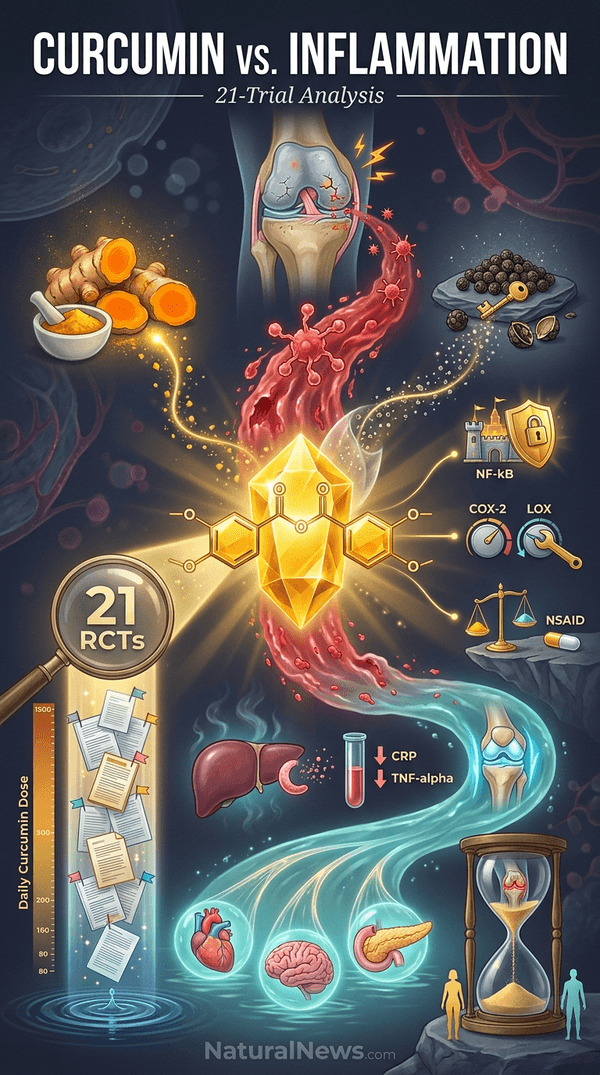
According to a report published by NaturalHealth365, the analysis appeared in BMC Complementary Medicine and Therapies in July 2025. The trials enrolled patients with knee osteoarthritis and compared curcumin users against patients receiving placebo or standard treatment. The report said doctors routinely track six inflammation signals in bloodwork, and two moved significantly: C-reactive protein (CRP) and tumor necrosis factor-alpha (TNF-alpha).
A separate review published in Frontiers in Pharmacology has linked curcumin supplements to health benefits across nine conditions [1]. Clinical trial data have also associated curcumin with reduced inflammation in fatty liver disease [2].
Study Scope and Findings
Researchers pooled data from 21 randomized controlled trials conducted in seven countries and tracked six inflammation markers, according to the report. CRP, a marker used to flag systemic inflammation throughout the body, dropped significantly in the curcumin groups. TNF-alpha, a signaling protein that drives part of the inflammatory cascade, also decreased, although the researchers noted that this result was less consistent under sensitivity testing.
The report stated that the CRP reduction was consistent across the pooled patient population. Prior coverage has linked turmeric to reduced inflammation and lower risks of arthritis [3]. The Centers for Disease Control and Prevention has predicted that one out of every two individuals will develop osteoarthritis by their 85th birthday, according to a 2018 report, which also described curcumin as a compound found in turmeric that has been studied against the joint-damaging effects of arthritis [4].
Mechanism
According to the report, curcumin appears to interrupt inflammatory signaling pathways rather than simply masking pain. The researchers pointed to an ability to calm the biological cascade that keeps joint tissue inflamed after injury or wear begins, and they said that mechanism offers a plausible explanation for the consistent CRP response.
Published sources describe the same pathway. Disease Prevention and Treatment, published by the Life Extension Foundation, states that curcumin inhibits COX-2 and LOX enzyme activity and interferes with NF-KB to stop autoimmune activation [5]. Research cited in Polyphenols: Prevention and Treatment of Human Disease shows that curcumin acts through the IKB-alpha/NF-KB pathway [6]. A science paper in the Journal of the Science of Food and Agriculture also identifies curcumin as a polyphenol with anti-inflammatory properties used in traditional medicine [7].
Dosage and Consistency Across Trials
Curcumin doses in the 21 trials ranged from 80 milligrams (mg) to 1,500 mg daily, according to the report, and the effect held across that range. Some trials paired curcumin with black pepper extract, while others used standalone curcumin capsules or whole turmeric preparations. The report said the consistency across seven countries and multiple formulations strengthens the reliability of the finding.
Piperine, the compound in black pepper that enhances curcumin absorption, has been described as a key to unlocking turmeric’s effects [8]. Research cited in Herbal Therapeutic Systems Lesson for Healthcare Today found that a phospholipid formulation of curcumin increased absorption compared with normal curcumin [9]. A 2026 systematic review of 19 randomized controlled trials, published in Frontiers in Nutrition, found that curcumin combined with piperine consistently reduced markers of inflammation in adults with chronic conditions [10].
Practical Implications and Broader Context
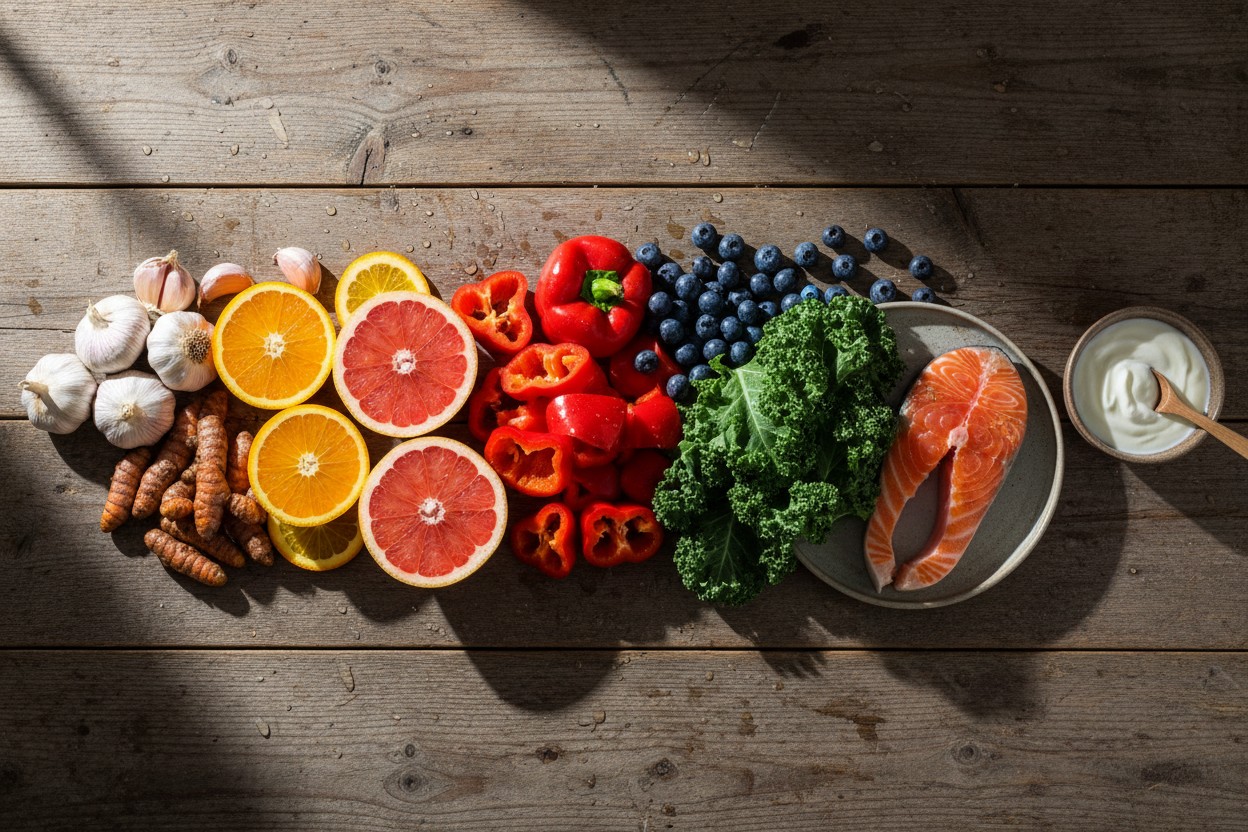
The report said trial participants used curcumin consistently for weeks or longer, and that occasional use of turmeric in a single recipe is unlikely to meaningfully change a marker such as CRP. Natural-health guidance recommends whole turmeric root or curcumin supplements paired with black pepper, and an anti-inflammatory diet, as part of a daily approach.
An anti-inflammatory diet, such as the Mediterranean diet, has been recommended for reducing symptoms of chronic inflammation [11]. Chronic, low-level inflammation contributes to seven of the ten leading causes of death in the United States, according to the Alliance for Natural Health [12].
The report also stated that environmental toxins, processed foods and everyday chemical exposures contribute to the inflammatory load that curcumin appears to help calm. Other reporting has described chronic inflammation as fueled by processed foods, environmental pollutants, and stress [13].
The meta-analysis itself did not examine that connection, according to the report. A benefit that appeared across countries, dose levels, and formulations points to a reliable mechanism at the core of the finding, the report said.
References
- Coco Somers. “Study Finds Curcumin Supplements Linked to Nine Health Benefits”. NaturalNews.com. May 24, 2026.
- NaturalNews.com. “Two Trials Find Curcumin Reduces Liver Fat, Inflammation in Fatty Liver Disease”. May 8, 2026.
- Lance D Johnson. “Starting a Home Apothecary? Fight Bloating, Blood Sugar Spikes, and Brain Fog with These Beginner Herbs”. NaturalNews.com. June 4, 2025.
- NaturalNews.com. “Turmeric Extract Combats the Joint-Damaging Effects of Arthritis”. NaturalNews.com. November 14, 2018.
- Life Extension Foundation. “Disease Prevention and Treatment”.
- Ronald Ross Watson, Victor Preedy and Sherma Zibadi. “Polyphenols: Prevention and Treatment of Human Disease”.
- “Benevolent Effects of Dietary Polyphenols Using Lung Inflammation as a Model”. Journal of the Science of Food and Agriculture 86:2499-2502 (2006).
- NaturalNews.com. “The Golden Key: How a Pinch of Black Pepper Unlocks Turmeric’s Ancient Healing Power”. April 13, 2026.
- “Herbal Therapeutic Systems Lesson for Healthcare Today”.
- Coco Somers. “Systematic Review Finds Curcumin-Piperine Supplementation Reduces Inflammation, Improves Metabolic Markers”. NaturalNews.com. May 31, 2026.
- NaturalNews.com. “Here Are Foods That Cause or Prevent Inflammation”. NaturalNews.com. September 13, 2018.
- Alliance for Natural Health. “1 – Alliance for Natural Health”. Alliance for Natural Health – ANH-USA.org. September 9, 2022.
- Coco Somers. “Nature’s Apothecary: 10 Powerful Spices to Quell Inflammation and Reclaim Your Health”. NaturalNews.com. February 20, 2026.
Explainer Infographic
Submit a correction >>
Tagged Under:
alternative medicine, analysis, C-reactive protein, Censored Science, curcumin, Cures, healing, health science, herbal medicine, Herbs, inflammation, inflammatory markers, natural cures, natural health, natural medicine, prevention, Randomized controlled trial, remedies, research, tumor necrosis factor-alpha, turmeric
This article may contain statements that reflect the opinion of the author
RECENT NEWS & ARTICLES